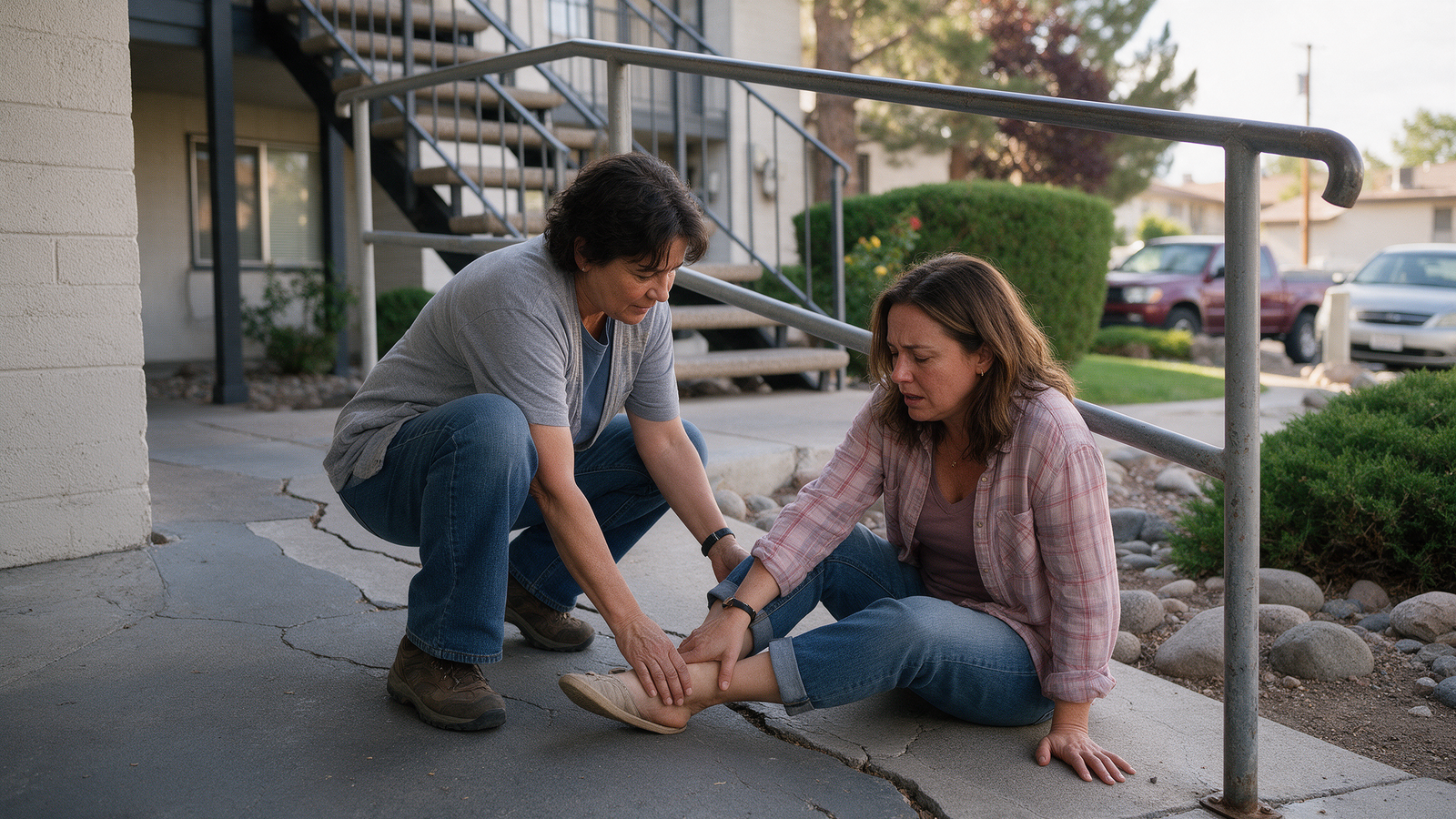
A rental property injury in Reno can raise complicated questions about who was responsible for keeping the property safe.
A tenant may fall on a damaged staircase. A visitor could suffer an injury because of poor lighting. Meanwhile, dangerous flooring, broken railings, or other hazards can also cause accidents.
However, an injury on rented property does not automatically make the landlord responsible.
Instead, liability often depends on who controlled the dangerous condition, what they knew about it, and whether reasonable steps could have prevented the injury.
When Can a Rental Property Injury in Reno Lead to a Claim?
Property owners generally have responsibilities concerning reasonably safe conditions on property they control.
However, rental properties can make those responsibilities more complicated.
A landlord may control certain areas while a tenant controls others. Additionally, a property management company may handle maintenance and repairs.
Therefore, determining responsibility often begins with identifying where the accident happened and who controlled that area.
The cause of the injury also matters.
Simply suffering an injury on someone else’s property does not automatically establish negligence.
Common Hazards at Rental Properties
Many different conditions can contribute to injuries at apartments, rental homes, and other residential properties.
Some hazards develop suddenly. Others may remain uncorrected for weeks or months.
Common examples can include:
- Broken stairs or handrails, uneven walkways, inadequate lighting, slippery surfaces, damaged flooring, falling objects, and unsafe common areas.
However, the existence of a dangerous condition is only one part of a potential claim.
The circumstances surrounding the hazard can become equally important.
Did the Landlord Know About the Dangerous Condition?
Notice can become a major issue in premises liability cases.
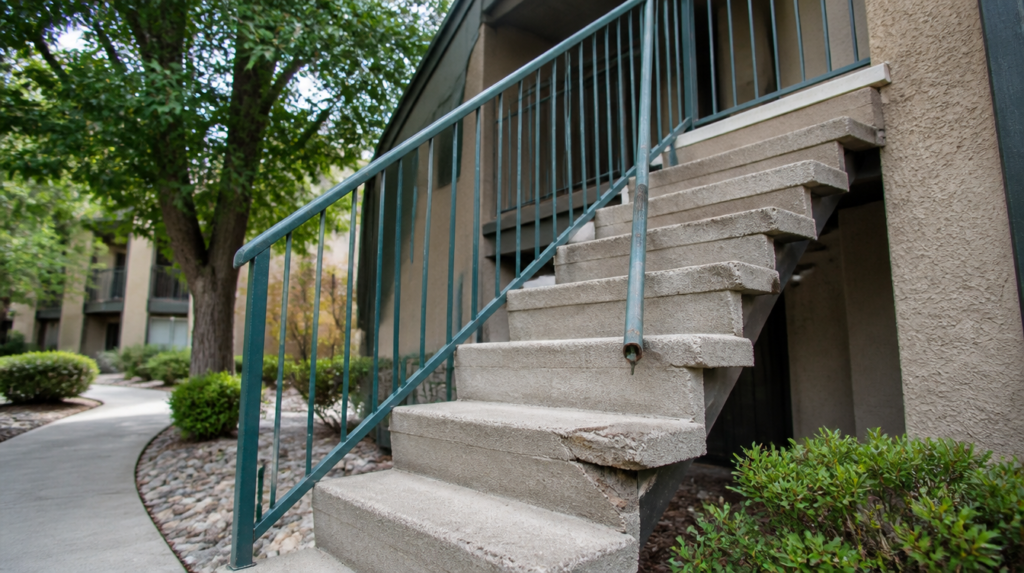
For example, suppose a tenant repeatedly reports a broken stair to the landlord. The condition remains unrepaired, and someone later falls on that stair.
Those previous reports could become important evidence.
However, sometimes a property owner may not receive direct notice.
In certain situations, a dangerous condition may have existed long enough that reasonable inspection or maintenance should have revealed it.
Therefore, determining when the problem began can become an important part of investigating a rental property injury in Reno.
What if the Property Manager Handles Repairs?
Many rental property owners hire management companies to oversee daily operations.
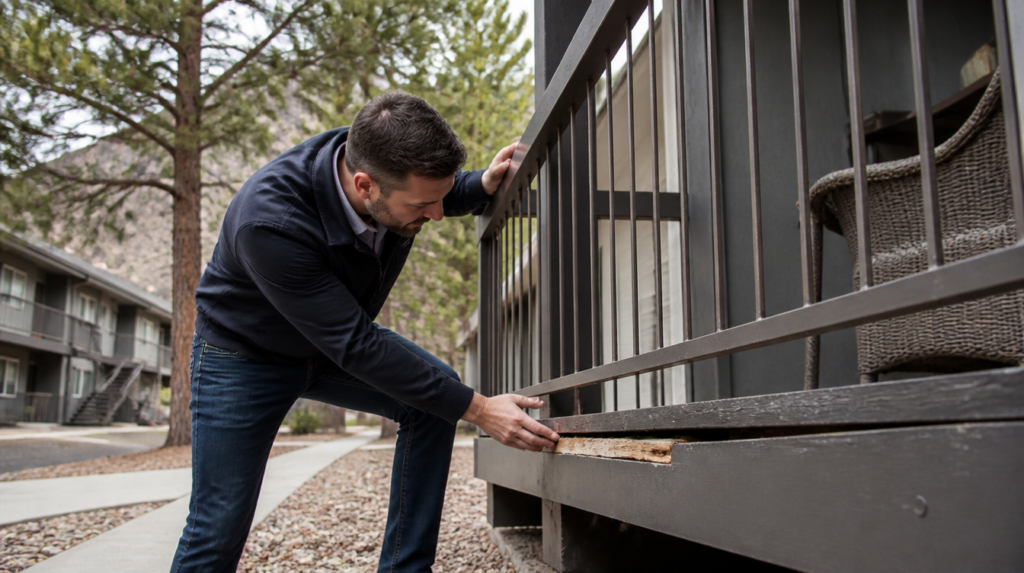
Property managers may collect rent, coordinate maintenance, inspect common areas, and respond to tenant complaints.
Consequently, an injury may require examining the responsibilities of both the owner and property manager.
Maintenance agreements, emails, repair requests, and inspection records can help establish who was responsible for addressing the hazard.
Additionally, contractors may become relevant when improper repair work contributes to an accident.
A premises liability investigation may involve several parties rather than one obvious defendant.
Injuries in Apartment Common Areas
Apartment complexes often contain areas used by many residents and visitors.
These areas may include hallways, staircases, parking lots, sidewalks, pools, laundry facilities, and landscaped spaces.
Generally, tenants do not personally control these shared areas.
Therefore, questions about maintenance and inspection often focus on the owner or company responsible for managing the property.
For example, a tenant may have little ability to repair a broken exterior staircase.
Likewise, an apartment resident may not control lighting in a shared parking area.
People injured under these circumstances may benefit from speaking with Reno personal injury attorneys about how property control could affect a potential claim.
What About Injuries Inside a Rental Home?
Accidents inside an individual rental unit can become more complicated.
Some maintenance responsibilities belong to landlords. Meanwhile, tenants may have responsibilities concerning conditions they create or control.
Consider a damaged fixture that a tenant previously reported.
If the landlord had responsibility for repairing the problem, those communications may become important.
However, imagine the tenant created a dangerous condition shortly before a visitor arrived. In that situation, responsibility may look very different.
Therefore, investigators need to understand how the hazard developed rather than simply where the injury occurred.
Evidence Can Help Establish Responsibility
Evidence often becomes especially important after a rental property accident.
Photographs can document the condition before someone repairs it. Maintenance requests may establish previous complaints. Additionally, witnesses may know how long the hazard existed.
Medical records can also document the injuries and treatment following the accident.
Other useful evidence may include security footage, inspection records, emails, text messages, incident reports, and lease documents.
However, some evidence can disappear quickly.
A property owner may repair the dangerous condition shortly after an accident. Surveillance systems may also overwrite older footage.
For that reason, documenting the scene early can become valuable.
What if the Injured Person Was Partly Responsible?
Not every accident has a single cause.
Sometimes the injured person may have contributed to what happened. However, that does not necessarily end every potential claim.
Nevada uses a modified comparative negligence system in many negligence cases.
That means responsibility may be divided among the people or entities involved. However, the specific facts determine how those rules apply.
For example, arguments may arise over whether someone noticed an obvious hazard or acted reasonably under the circumstances.
A personal injury claim in Reno may therefore require examining the actions of everyone involved.
What Damages Can Result From a Rental Property Injury?
A serious injury can create consequences well beyond the initial accident.
Medical treatment may involve emergency care, diagnostic testing, physical therapy, medication, surgery, or follow-up appointments.
Additionally, an injured person may miss work while recovering.
Some injuries can also affect future employment, daily activities, or long-term health.
Consequently, evaluating a potential claim often requires examining both current losses and reasonably anticipated future effects.
The seriousness of an injury alone does not establish liability. However, documenting those losses becomes important when another party may be legally responsible.
What Should You Do After a Rental Property Injury in Reno?
After receiving necessary medical attention, documenting what happened can help preserve useful information.
Photographs of the hazard can be especially valuable. Additionally, injured tenants should consider preserving maintenance requests and communications concerning the property.
Witness information can also become important.
Most importantly, avoid assuming that a repaired hazard means evidence no longer exists. Emails, maintenance records, photographs, and other documentation may still help establish what happened.
Understanding who controlled the property can then help determine whether a potential claim exists.
Injured at a Rental Property in Reno?
Rental property accidents can involve landlords, management companies, contractors, tenants, or several parties at once.
Justice Law Center represents people injured because of negligence in Reno and throughout Northern Nevada. Our attorneys can investigate the circumstances, identify potentially responsible parties, and explain available legal options.
Contact Justice Law Center for a free consultation if you were injured at a rental property and have questions about your rights.